Teaching from
Integrity
You did everything the training asked. You found your footing, your rhythm, your own way of running a class. And still, somewhere past the songs and the routines, you sense there is a teacher you haven't become yet.
This year is for that teacher.
You aren't new to teaching.
But you are new to this.
A recurring conflict you can't resolve with technique. A kind of tired that a summer break doesn't fix. A felt sense that your students are asking for more of you than the lesson plan can explain. Or the growing sense that your training gave you a real beginning, and you are now ready for what comes after it.
If you recognized yourself in any of that, read on.
The teacher at years two through seven, who suspects there is more to this profession than their training revealed, and is ready to find out.
The educator who is warm and present and genuinely loves their students, and is beginning to feel the slow erosion that comes from giving without replenishing.
The one who notices that a technique-centered approach isn't answering the deeper questions raised by the particular students and families in their care.
Not ready to apply, but you know
this is calling you?
Leave your name and email and I'll keep you close to The Stance of the Teacher and the 2027–28 cohort — including any scholarship news and gatherings before Weekend One begins.
I'll be in touch with cohort news, scholarship updates, and gathering invitations as they come.
What goes wrong in our classrooms tells us about ourselves. The student who triggers us beyond reason, the parent who challenges everything we do, the colleague dynamic that never resolves — these are not problems to be managed away. They are invitations.
Five thresholds.
One continuous becoming.
Each weekend builds the same underlying capacity and turns it toward a new territory: first we resource and ground you, then we train you to sense clearly, then we bring that clear seeing into the work of teaching itself. These are not lectures. They are living encounters — constellation work, contemplative practice, movement, and reflection that continues between sessions. The cohort is small by design. What happens here stays here.
A facilitated practice that makes the hidden dynamics of a family or organizational system visible. Relationships within a system are represented spatially, revealing patterns that have been shaping behavior — often across generations — without anyone being fully aware of them. For teachers, it offers a way to understand what they carry into the classroom from their own family history, and what their students may be carrying from theirs. No prior experience is needed. The work speaks for itself.
Roots: Resourcing the Teacher
We begin with you. This opening weekend is given fully to constellation work: individual family constellations, the Incarnation Spiral, and smaller exercises that surface the gifts and challenges each of us carries in from our own lineage. The aim is to connect you to your roots and your ancestral stream before we ask anything else of you.
Because this is the most personally exposing work of the year, Weekend One runs over three full days, with space to open slowly, go deep, and close without rushing.
Learning to Sense: Plants, Trees & Creative Life
With your own ground beneath you, we begin training the capacity to sense what is there. We practice reading plants, meditating with trees, and sitting with clouds — learning to be present to what is in front of us rather than to our expectations. From that clearer place we return to constellation work, then move into creativity through improv theater: the same sensing capacity that learned to receive a plant now learns to receive a scene partner, a spontaneous moment, an idea that wasn't planned.
Authority, Leadership & Loving Boundaries
Authority that students trust is never performed — it is grown from the inside out. By this weekend the cohort is resourced and practiced in sensing, so we can go further: deeper constellation work around the patterns that shape how we lead, and direct training in the instruments of authority itself — speech, posture, and movement. We work with what it means to hold a boundary because you care, not because you need control.
Learning to Sense: Animals & Our Relationship to Mistakes
The sensing practice widens. We meditate on animals and work with drawing exercises, continuing to train perception free of our own projection. Alongside this, we turn to a theme every teacher knows intimately and few of us were ever taught how to hold: our relationship to mistakes, our own and our students'. We practice meeting error — in ourselves and in the children we teach — as evidence of learning rather than as a verdict.
Meeting the Child, Meeting Yourself
The circle widens to its fullest. We deepen our capacity to perceive through child study and close observation of the complex human being, working together as a cohort alongside relationship work and a final round of constellation work. By now the trust this group has built across the year makes a different depth of seeing possible.
We close the weekend, and the year, by turning that same clear seeing inward.
The rhythm of our
time together.
Weekend One in August runs longer — three full days — to give the year's opening constellation work space to land. From Weekend Two onward, we hold this rhythm:
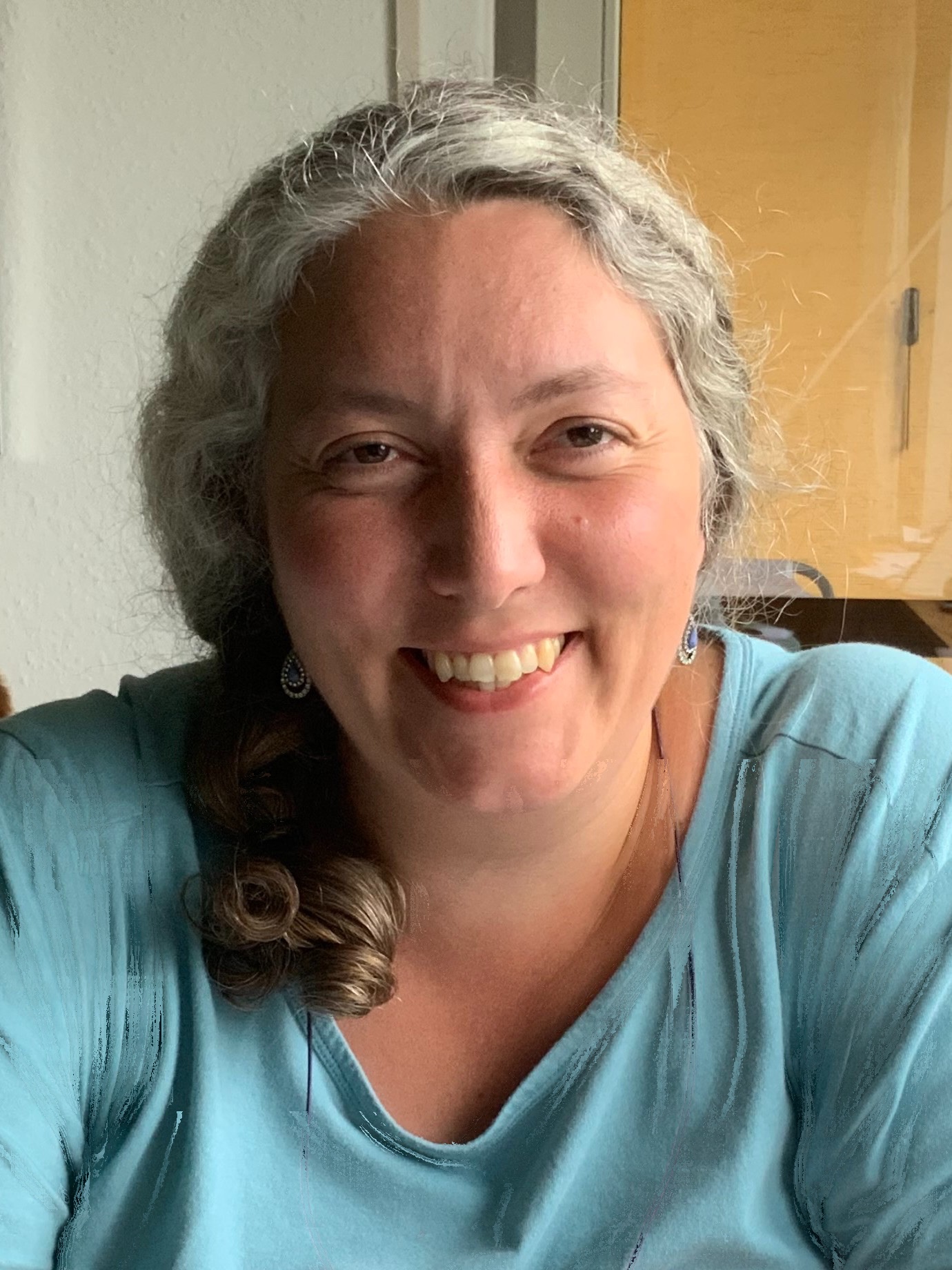
Laura Hayes
Laura Hayes has spent two decades inside Waldorf classrooms and communities — first as a class teacher in Germany and the United States, and since 2022 as Head of School at Ithaca Waldorf School in New York.
She is the author of The Stance of the Teacher: Teaching from Integrity (2026), a trained systemic constellation facilitator, certified in Tier 1 and Tier 2 Restorative Practices, and a practitioner of Nonviolent Communication, soul and health coaching, and the Lex Bos decision-making model. She has facilitated constellation work for school communities, faculty groups, and spiritual communities across North America and Germany.
This program didn't start as a program.
After The Stance of the Teacher came out, readers kept asking the same thing: what comes next? Not more theory — a place to actually do the work the book points to, with other teachers, over enough time for it to change something.
This is that answer. The 2027–28 cohort is the first time I'm offering it — five weekends built from two decades in Waldorf classrooms and three years leading a school, going deeper than I've offered the Waldorf community before.
It's new because you asked for it. It isn't untested — it's what I've lived and taught for twenty years, shaped into a year instead of a book.
Your year of inner work.
A 10-month payment plan is available at $145/month. Write to request it when you apply.
Accommodations are arranged individually by each participant. Ithaca and the surrounding Finger Lakes region offer a wide range of options, from in-town hotels to lake cottages, and we are glad to share recommendations once you register.
Friday evenings we gather for dinner at a local Ithaca restaurant — each person pays for themselves. It is a good way to arrive.
A small number of need-based partial scholarships are available. If cost is the only barrier between you and this year, please write before you decide not to come.
What you need to know.
Ithaca, New York, in the heart of the Finger Lakes. Accessible from New York City (4 hrs), Philadelphia (5 hrs), and Toronto (3.5 hrs). Detailed venue information shared upon registration.
Minimum 6 participants, maximum 12. This is a cohort, not a course — the group itself is a significant part of what the year offers. Full attendance at all five weekends is expected.
Waldorf educators at any stage of their teaching life. The training draws most deeply on Waldorf pedagogy and Anthroposophy, though educators from other independent school contexts are also welcome.
The Stance of the Teacher: Teaching from Integrity is the companion text for the year. Participants are encouraged to read it before Weekend One.
A journal. Comfortable clothing for movement. The training asks for presence, not preparation.
A certificate of completion is provided for participants who attend all five weekends. An invoice is available for school reimbursement upon request.
Real. The cohort works because everyone in the room is genuinely ready for this kind of exposure — the application helps me build a group where that's true for all six to twelve of you, not just some.
Then this isn't your year — and that's alright. The work builds across all five weekends, and the cohort depends on continuity. If you already know of a conflict, wait and join a future cohort instead. I'd rather have you fully than partially.
Because the cohort is capped at twelve, and because a year like this is worth planning for — budgets, PTO, childcare. Early applicants also get first pick of the payment plan and scholarship conversations, if either is relevant to you.
Scroll back up to Stay Close to This — leave your email and I'll keep you posted, no commitment.
The journey continues.
Honestly.
Applications for the 2027–28 cohort open now. The five weekends run August 2027 through May 2028; exact dates will be confirmed by January 2027. Space is limited, and a short application helps ensure the cohort is a genuine fit for everyone in it.